Physical Properties of Materials: Definitions, Examples, and How We Test Them
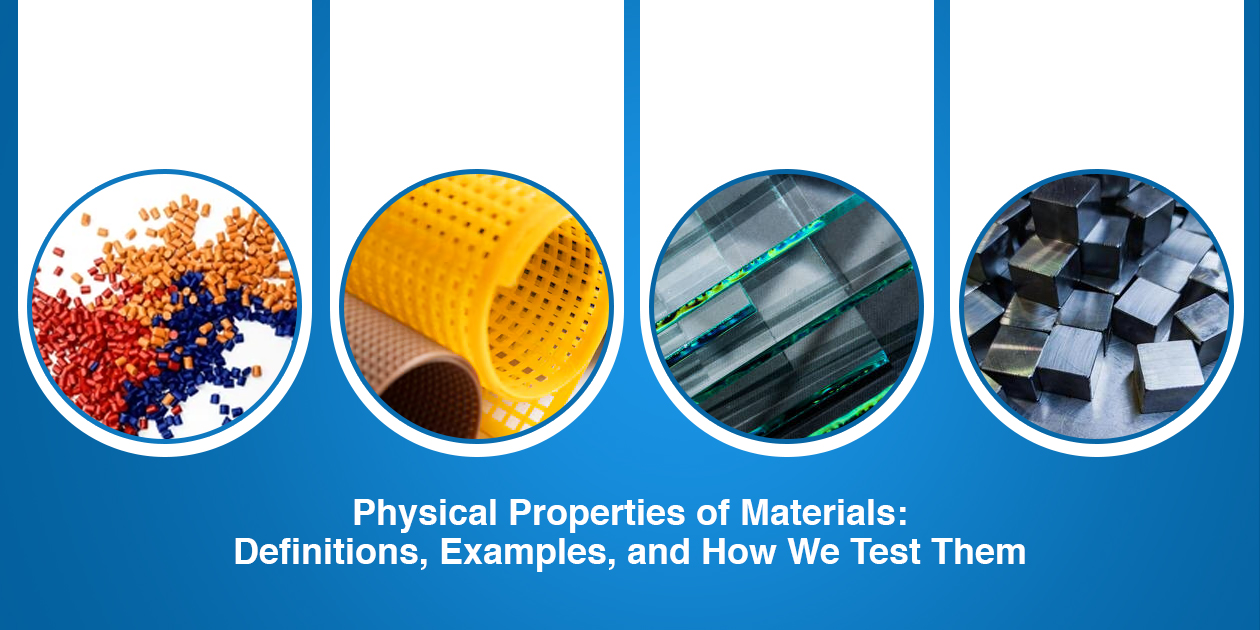
The physical properties of materials are the characteristics you can observe or measure without changing a material’s chemical makeup. Density, melting point, thermal conductivity, electrical conductivity, and thermal expansion are the core examples. Engineers compare these material properties before they choose a metal, plastic, rubber, or ceramic.
This guide explains the properties of materials in plain terms. It gives checked reference values. It shows how testing turns material qualities into numbers. It also explains how to pick the right material for a job. We have built hardness testers since 1954. Every day, we see how measured properties decide whether a part passes or fails.
What Are the Properties of a Material?
A material property describes how a material behaves under heat, force, electricity, light, or chemicals. Scientists sort materials properties into three families:
- Physical properties: Density, melting point, boiling point, thermal and electrical conductivity, thermal expansion, and optical or magnetic behavior.
- Mechanical properties: Strength, hardness, toughness, elasticity, plasticity, ductility, and malleability.
- Chemical properties: Corrosion resistance, reactivity, and flammability.
Many physical characteristics of materials stay the same whatever the sample size. A small copper wire and a large copper bar share the same density and melting point. Scientists call these intensive properties. Mass and volume are extensive properties, because they change with the amount of material. Intensive properties make reliable benchmarks for material selection and quality control.
Physical vs. Mechanical vs. Chemical Properties
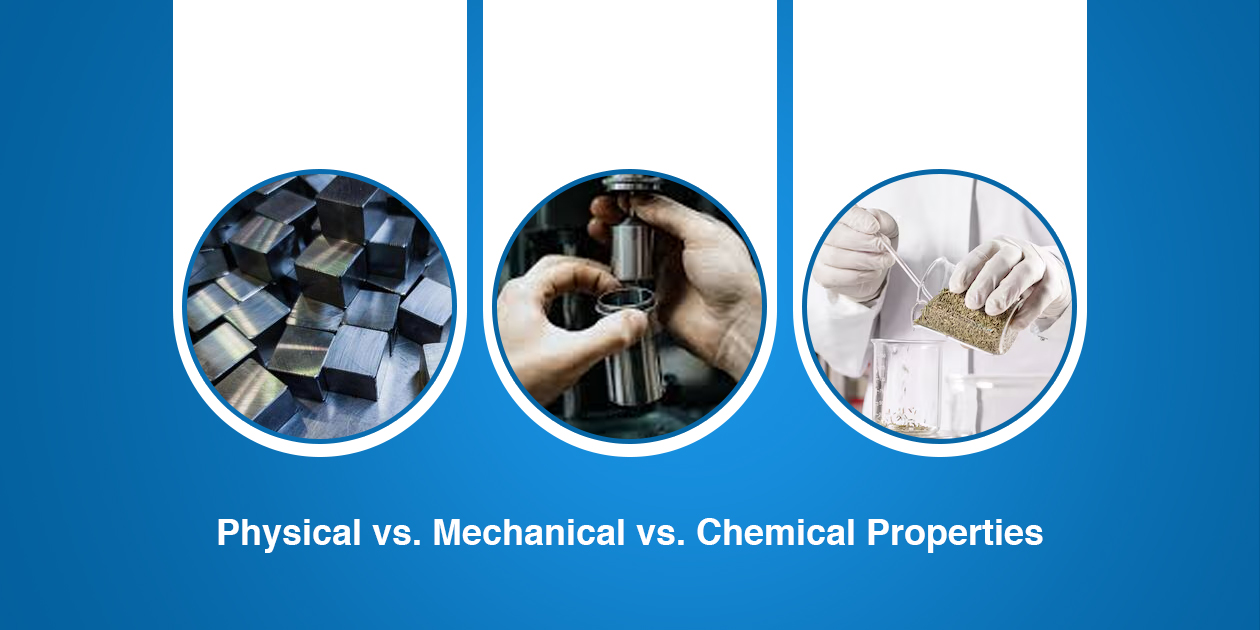
| Property family | What it describes | Typical examples |
| Physical | Behavior without changing chemical identity | Density, melting point, conductivity |
| Mechanical | Response to applied force | Strength, hardness, toughness |
| Chemical | Reaction with other substances | Corrosion, oxidation, flammability |
Some material qualities overlap. Hardness appears in most mechanical lists, yet many engineers also treat it as a measurable physical characteristic. We cover it below because it drives so many testing decisions.
Key Physical Characteristics of Materials
Density:
Density is mass per unit volume. Pure water reaches its maximum density of about 1,000 kg/m³ (1 g/cm³) at 4 °C. Aluminum measures about 2.70 g/cm³, and carbon steel about 7.85 g/cm³. Low density cuts weight in aircraft and portable products. High density adds stability and damps vibration. When you need density and hardness on the same sample, our hardness and density testers cover both.
Melting Point:
The melting point is the temperature where a solid becomes a liquid. Iron melts at about 1,538 °C. Tungsten melts at 3,422 °C, the highest of any pure metal. Carbon sublimes at atmospheric pressure instead of melting, so it has no melting point. Pure metals melt at one temperature. Many polymers soften across a range, so engineers also check the glass transition and processing temperatures.
Thermal Conductivity:
Thermal conductivity shows how fast heat moves through a material. Near room temperature, silver conducts 429 W/m·K, copper 401, and aluminum 237, according to AIST thermophysical data. Foam and fiberglass conduct far less, so engineers use them as insulation. Cookware and heat sinks need high values. Handles and building envelopes need low ones.
Thermal Expansion:
Most materials expand when heated. Aluminum expands about 23 µm per meter per kelvin at 20 °C, while carbon steel expands 11 to 13. Tungsten expands only about 4.5. Mismatched rates cause stress, warping, and failed seals, so designers match materials in assemblies. Temperature also shifts hardness, so our temperature controlled hardness tester measures samples at set temperatures.
Electrical Conductivity:
Electrical conductivity measures how easily current flows. The International Annealed Copper Standard (IACS) sets annealed copper at 100%, which equals 5.8 × 10⁷ S/m at 20 °C. Silver beats that mark at about 6.3 × 10⁷ S/m, or roughly 106% IACS. Aluminum reaches about 61%. Engineers choose copper for most wiring because it combines high conductivity with a lower cost than silver. Rubber and glass resist current, so they work as insulators.
Optical and Magnetic Behavior:
Materials can be transparent, translucent, or opaque. They can also be magnetic or nonmagnetic. Glass passes light, and iron responds to magnets, while aluminum does not.
Reference Values for Common Materials
The table below lists materials of properties side by side, so you can compare values quickly.
| Material | Density (g/cm³) | Melting point (°C) | Thermal conductivity (W/m·K) | Linear expansion (µm/m·K) |
| Aluminum | 2.70 | 660 | 237 | 23.1 |
| Copper | 8.96 | 1,085 | 401 | 16.5 |
| Carbon steel | 7.85 | 1,400–1,500 | 54 | 11–13 |
| Tungsten | 19.25 | 3,422 | 173 | 4.5 |
Typical values for pure metals and common carbon steel near room temperature. Alloys, impurities, and heat treatment shift them.
Mechanical Qualities That Shape Material Selection
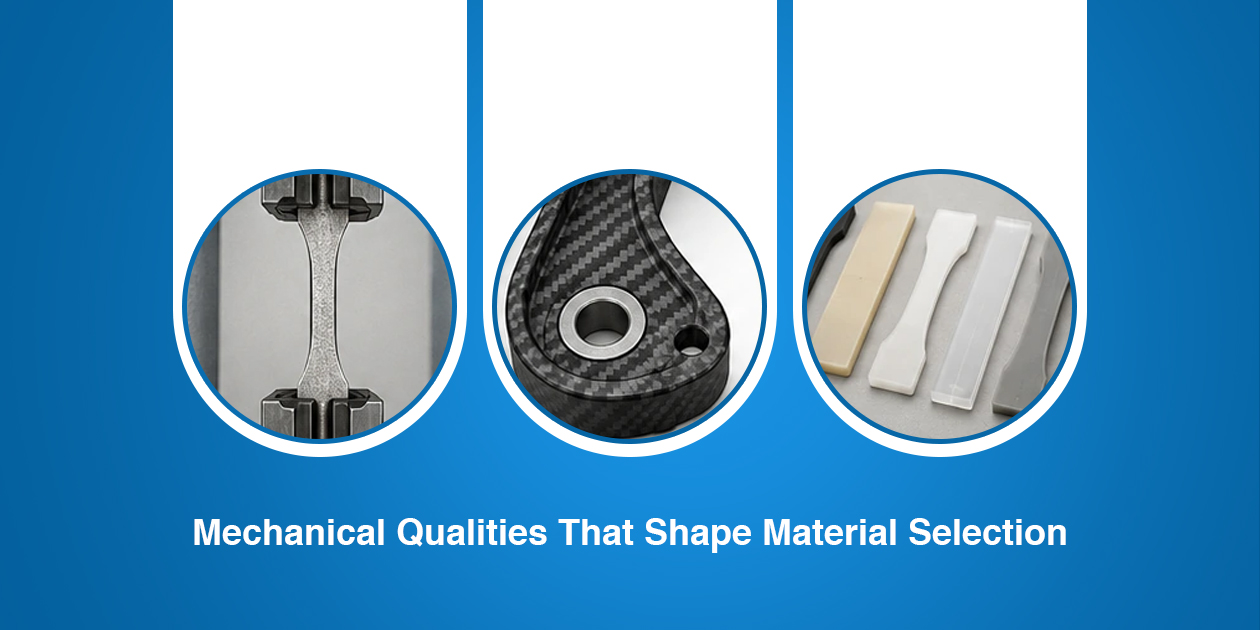
Physical data tells only part of the story. Engineers pair it with mechanical qualities:
- Strength: Resistance to deformation or failure under load.
- Toughness: Ability to absorb impact without breaking.
- Elasticity: Ability to return to the original shape after bending or stretching.
- Plasticity: Permanent change in shape after the load goes away.
- Ductility and malleability: Ability to stretch into wire or hammer into sheet without cracking.
- Hardness: Resistance to indentation and scratching.
Hardness gives a fast, low-cost read on how a material will behave. A Shore durometer presses a calibrated indenter into the sample and reports a value. Our Shore hardness testers measure materials from soft rubber to rigid plastics under ASTM D2240. Pharmaceutical labs test a related property on tablets, called breaking force. Our THT500 tablet hardness tester measures it from 3 to 500 N.
Properties of Common Material Families
| Material | Typical physical characteristics |
| Metals | Dense, strong, good heat and electrical conductors, malleable |
| Plastics | Lightweight, low conductivity, often waterproof, can be transparent |
| Rubber and elastomers | Flexible, elastic, electrical insulators, soft to medium hardness |
| Glass | Hard and transparent, strong in compression, brittle |
| Wood | Moderate density, poor conductor when dry, naturally variable |
| Ceramics | Very high melting point, hard, brittle, strong insulators |
Material families only set a baseline. Additives, fillers, temperature, and processing change real values. That is why rubber and plastic labs use rubber and plastic hardness testing built for those materials.
How We Measure Material Properties?
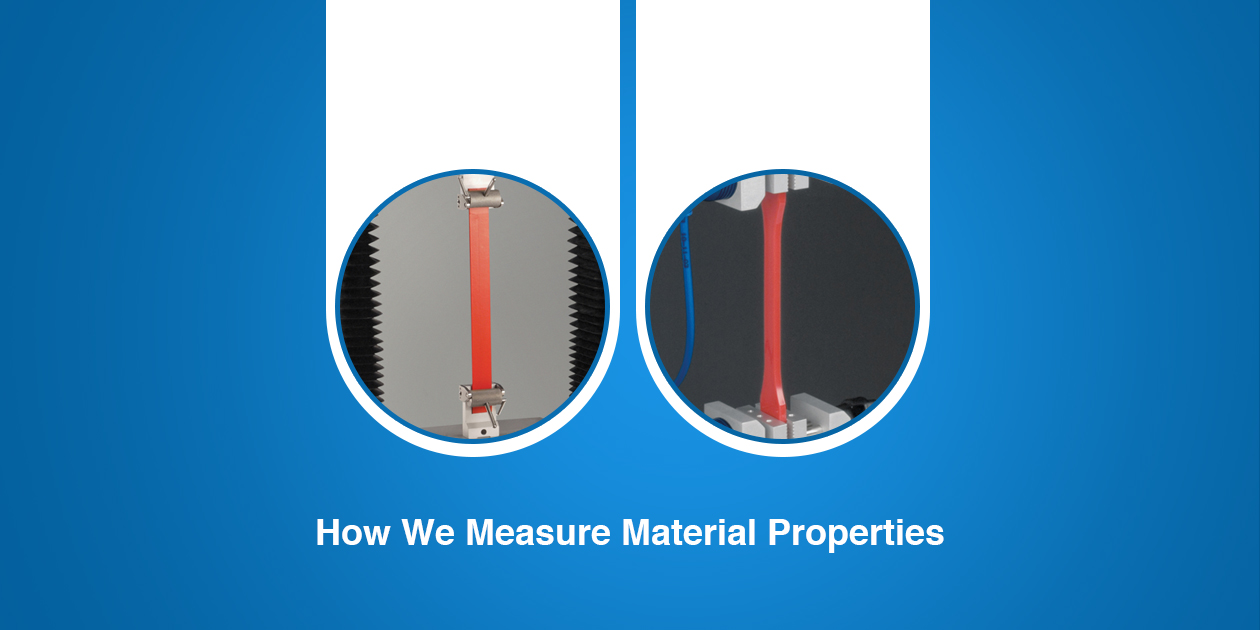
Testing turns material qualities into comparable numbers. Labs follow published standards so results match across companies and countries:
- ASTM D2240 covers durometer hardness of rubber and plastics.
- ISO 48-4 covers Shore hardness of rubber, and ISO 48-2 covers IRHD, the international rubber hardness degree.
For rubber, plastics, and foams, our digi test II measures Shore, IRHD, and VLRH automatically, which reduces operator influence. It also tests convex and concave surfaces. Specifications, scales, and fixtures are listed on each product page. Choosing between hardness testing options starts with your sample size, its shape, and the scale your customer specifies.
Calibration matters as much as the instrument. We earned accreditation in 1996 as the first DKD calibration laboratory in Europe. Today our DAkkS-accredited calibration laboratory works to ISO/IEC 17025 and calibrates Shore and IRHD devices. Its certificates trace your results to national standards.
How to Choose a Material by Its Properties?
Follow these steps to match material properties to a job:
- Define the load and environment. Note temperature range, chemicals, moisture, and force.
- Rank the properties that matter. Weight, conductivity, hardness, or cost may lead.
- Compare datasheet values. Check the test standard behind every number.
- Verify with testing. Test samples from your own production batch, not only the supplier’s sheet.
Trade-offs appear fast. Copper beats aluminum for heat transfer (401 vs. 237 W/m·K). Yet aluminum weighs about one-third as much (2.70 vs. 8.96 g/cm³), so it often wins in a lightweight heat sink.
New Directions in Materials Science
Materials science links structure, processing, and performance. In February 2026, a team from TU Dresden, the Max Planck Institute in Halle, and the Helmholtz-Zentrum Dresden-Rossendorf reported a chlorine-terminated MXene. It showed a 160-fold gain in macroscopic electrical conductivity over the same material made by traditional methods. Results like this widen the physical characteristics of materials that engineers can specify.
Frequently Asked Questions
Physical properties are characteristics you can observe or measure without changing a material’s chemical identity. Examples include density, melting and boiling point, thermal and electrical conductivity, thermal expansion, color, and transparency.
Physical properties describe a material without changing its identity, such as density or melting point. Chemical properties describe how a material reacts or turns into something else, such as rusting or burning.
Intensive properties, such as density and melting point, stay the same whatever the sample size. Extensive properties, such as mass and volume, change with the amount of material.
Physical properties include density, melting point, and conductivity. Mechanical properties describe the response to force, such as strength, toughness, and hardness.
Sources differ. Many list hardness as a mechanical property because it measures resistance to indentation. Others call it a physical characteristic because the test does not change the material’s chemistry. Either way, hardness testing gives a fast quality check.
Each property has a standard method. Use mass and volume for density, a furnace or calorimeter for melting point, and a durometer for hardness. Standards such as ASTM D2240 and ISO 48 keep results consistent.
Silver leads all pure metals for both, at 429 W/m·K for heat and about 6.3 × 10⁷ S/m for electricity. Copper comes second and costs far less, so it dominates wiring and heat exchangers. Diamond, a nonmetal, conducts heat better than any metal.
Material qualities decide performance, safety, and cost. A seal with the wrong hardness leaks, and a housing with the wrong expansion rate cracks. Measured properties prevent both failures.