Tablet Hardness Tester
A tablet hardness tester measures how much force it takes to crush a tablet. It is a key tool in pharma QC, R&D, and production. It protects batch quality. It keeps you in line with USP and GMP rules.

A tablet hardness tester measures how much force it takes to crush a tablet. It is a key tool in pharma QC, R&D, and production. It protects batch quality. It keeps you in line with USP and GMP rules.
Engineered to measure the breaking force of pharmaceutical tablets with industry-leading accuracy and repeatability, ensuring reliable QC results.
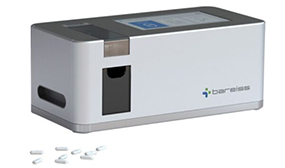
Our most specified instrument for pharmaceutical QC labs and production environments.
| Spec | Detail |
| Measurement range | 0 – 500 N (0 – 50 kp) |
| Accuracy | ±1% |
| Parameters | Hardness + Thickness + Diameter |
| Compliance | USP <1217>, GMP, 21 CFR Part 11 |
| Data output | USB, printer, LIMS-ready |
| Best for | QC labs, production, GMP environments |
Best for: High-volume QC, regulated pharma manufacturing, batch release testing.
Four product types. Every use case is covered.
Best for: Production QC · GMP environments · Large batch testing
It tests tablets without any operator input and auto-logs, measures hardness, thickness and diameter together that eliminates human error.
Best for: Mid-size QC labs · R&D · Formulation development
It has digital sensors, a clear display, and USB output. More precise than older analog models and fits on any bench.
Best for: Small batch testing · Budget labs · Occasional QC checks
It doesn’t need any hand-operated lever. This measures in low cost and is maintained easily.
Best for: On-site testing · Multi-location facilities · Small batch testing
It is compact and battery-powered that uses on the floor or at remote sites. This can be easily set-up and carried.
A tablet hardness tester also called a tablet breaking force tester or tablet hardness tester machine measures tablet breaking force: the force to crush a tablet. It is also known as a tablet hardness testing machine. Results are in Newtons (N) or kiloponds (kp).
The hardness of tablet is measured by placing it between two jaws. One jaw stays fixed while the other moves and applies pressure. The machine records the exact force at the point of fracture. This is called tablet breaking force measurement.
Tablet hardness is measured by this method across USP, BP, and EP. A pharmaceutical tablet hardness tester is built for regulated use and supports full IQ/OQ/PQ steps. Need to test tablet hardness with confidence? A lab-grade tablet hardness tester or high accuracy tablet hardness tester is the right choice.

| Risk | Cause | Impact |
| Poor dissolution | Too hard | Drug not absorbed in time |
| Friability fail | Too soft | Crumbles in packing/shipping |
| Dose variation | Uneven press | Dose is off between tablets |
Pharmaceutical tablet hardness requirements are regulatory, not optional. Every batch must fall within the acceptable tablet hardness range before release. The hardness test for tablets USP <1217> is the governing standard.
| Factor | Manual | Automatic |
| Cost | Low | Higher |
| Speed | Slow | Fast |
| Accuracy | Operator-dependent | Consistent |
| Data logging | Manual | Auto-logged |
| GMP support | Limited | Full |
| Best for | Small labs, R&D | QC, production |
In a GMP setting, the automatic tablet hardness tester vs manual choice is clear automation wins. It removes operator error. For lower volumes, a digital tablet hardness tester hits the middle ground. We can help you find the best tablet hardness tester for lab use at any scale.
Not sure which type fits your lab? Talk to a specialist
A tablet hardness tester for pharmaceutical industry use must meet GMP rules. A tablet hardness tester for pharmaceutical production needs speed and full data logging. A tablet hardness tester for QC labs needs audit trail support. A tablet hardness tester for R&D needs flexibility. A tablet hardness tester for production needs real-time output. For bench-top work, a tablet hardness tester for laboratory use or a lab tablet hardness tester is the right fit.
All instruments must meet:
Acceptable tablet hardness ranges by tablet type:
|
Tablet Type |
Hardness Range |
|
Standard oral |
4–10 kp |
|
Coated |
8–20 kp |
|
Chewable |
3–6 kp |
|
Extended-release |
10–30 kp |
|
Effervescent |
15–40 kp |
Every product needs its own validated spec from your own data.
Both tests are required by USP for tablet release because they cover different failure modes, so you need both.
The tablet hardness tester principle is simple: apply force, record the break point. All tablet hardness tester types follow this same method. The key differences are speed, automation level, and data output.
| Problem | Fix |
| Inconsistent tablet hardness testing | Switch to automatic model with auto-feed |
| Tablet hardness testing errors | Calibrate regularly, control tablet orientation |
| Tablet hardness variation causes | Check granule size, compression force, punch wear |
How to ensure consistent tablet hardness: Use a calibrated automatic tester, test at set intervals, set tight upper/lower limits, train operators, and act on any out-of-range result immediately.
Talk to us about solving testing inconsistencies
| Type | Approx. Price Range |
| Manual tablet hardness tester | $150 – $500 |
| Digital tablet hardness tester | $500 – $2,000 |
| Automatic tablet hardness tester | $3,000 – $15,000+ |
| Portable tablet hardness tester | $300 – $1,500 |
The tablet hardness tester price range above is a market average. Final pricing depends on model, features, and region. We offer competitive pricing across all types.
Want to buy tablet hardness tester equipment that fits your needs? We match you to the right model fast.
We are trusted tablet hardness tester suppliers working with leading tablet hardness tester manufacturers across the globe. Every unit is a precision tablet hardness tester built to work as tablet hardness testing equipment, tablet testing equipment, and a hardness tester machine for tablets in one package.
Whether you need a hardness tester for tablets for one lab or a fleet of tablet testers across sites we have the right model. Our range covers every type of tablet tester, from basic manual units to fully automatic tablet breaking force testing equipment.
Every instrument ships with:
A tablet hardness tester measures the force to crush a tablet. It is used in QC, R&D, and production to check tablets meet their strength spec.
It measures tablet breaking force, the peak force at fracture in Newtons or kiloponds. Many models also check thickness and diameter in the same test.
Hardness controls how a tablet dissolves, how it holds up in shipping, and whether the dose is right. Too hard or too soft both are a risk to patients. Tablet hardness testing confirms every batch meets spec before it ships.
Tablet breaking force is the force needed to break a tablet under set conditions. It is the main output of any tablet breaking force testing machine, measured per USP <1217>.
The best tablet hardness tester for QC labs is an automatic model with data logging, audit trail, and multi-parameter output. For smaller labs or tablet hardness tester for small batch testing, a digital bench-top model is the practical choice.
Standard oral tablets: 4–10 kp. Coated tablets: 8–20 kp. Extended-release: up to 40 kp. Every product needs its own validated spec from your own data.
I am text block. Click edit button to change this text. Lorem ipsum dolor sit amet, consectetur adipiscing elit. Ut elit tellus, luctus nec ullamcorper mattis, pulvinar dapibus leo.
We supply precision tablet hardness testers from digital and manual to fully automatic tablet hardness testing equipment for pharma manufacturers, QC labs, R&D teams, and production sites worldwide.
Pick your model. Get a quote. Ship fast.