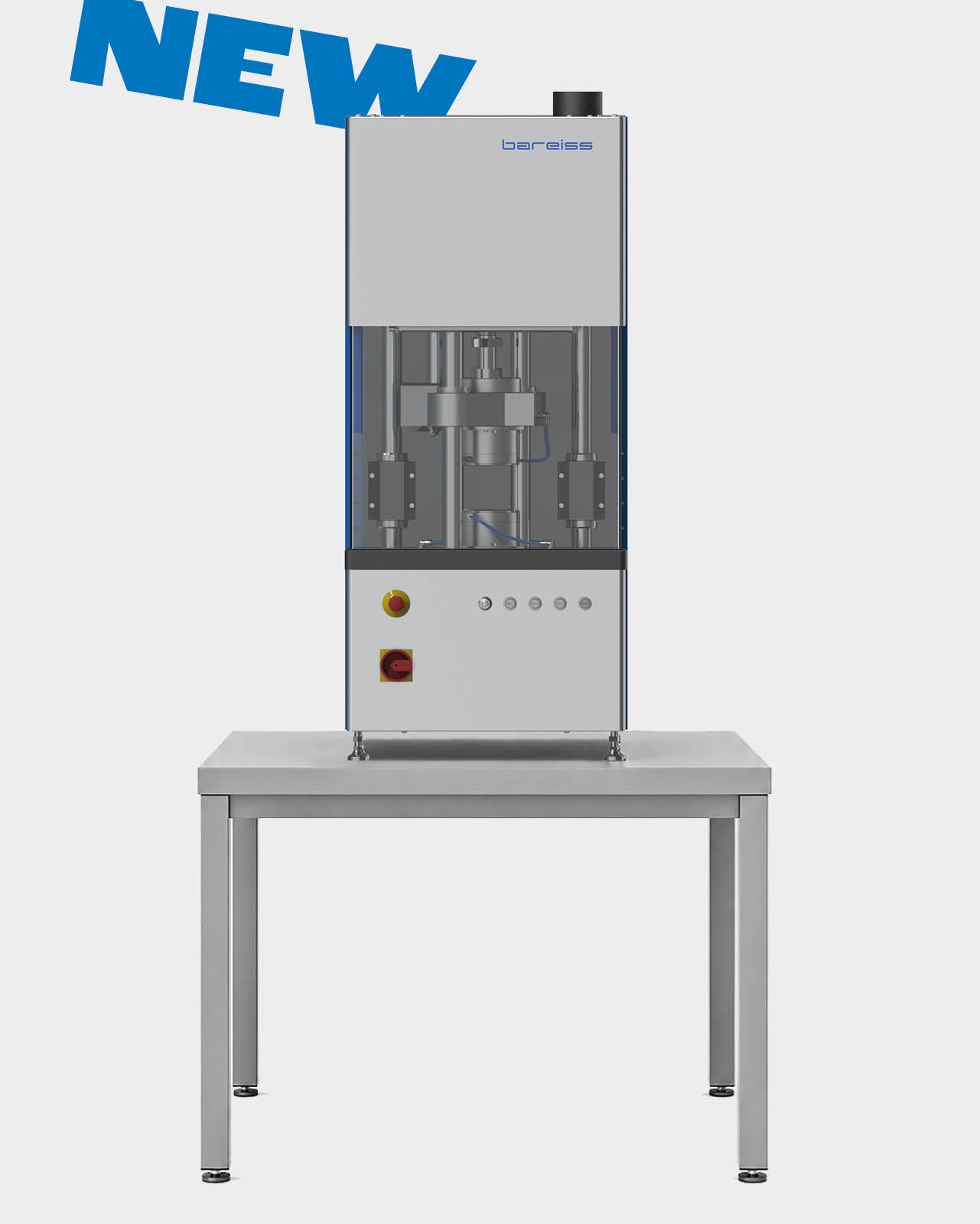
A rotorless rheometer measuring cure characteristics and viscoelastic properties of rubber compounds via oscillating die across an extended strain range, delivering comprehensive vulcanization data.

A rotorless rheometer measuring cure characteristics and viscoelastic properties of rubber compounds via oscillating die across an extended strain range, delivering comprehensive vulcanization data. The Bareiss MDR ultra sets a new benchmark in cure analysis — delivering fast, accurate characterization of rubber compounds under isothermal and non-isothermal conditions. Its ultra-rigid frame, sealed biconical dies, and advanced temperature management guarantee stable, repeatable measurements — fully conforming to ASTM, ISO, and DIN standards. Combined with the modern and user-friendly BareissOne software, it transforms complex curing data into clear, actionable insights for confident quality assurance.
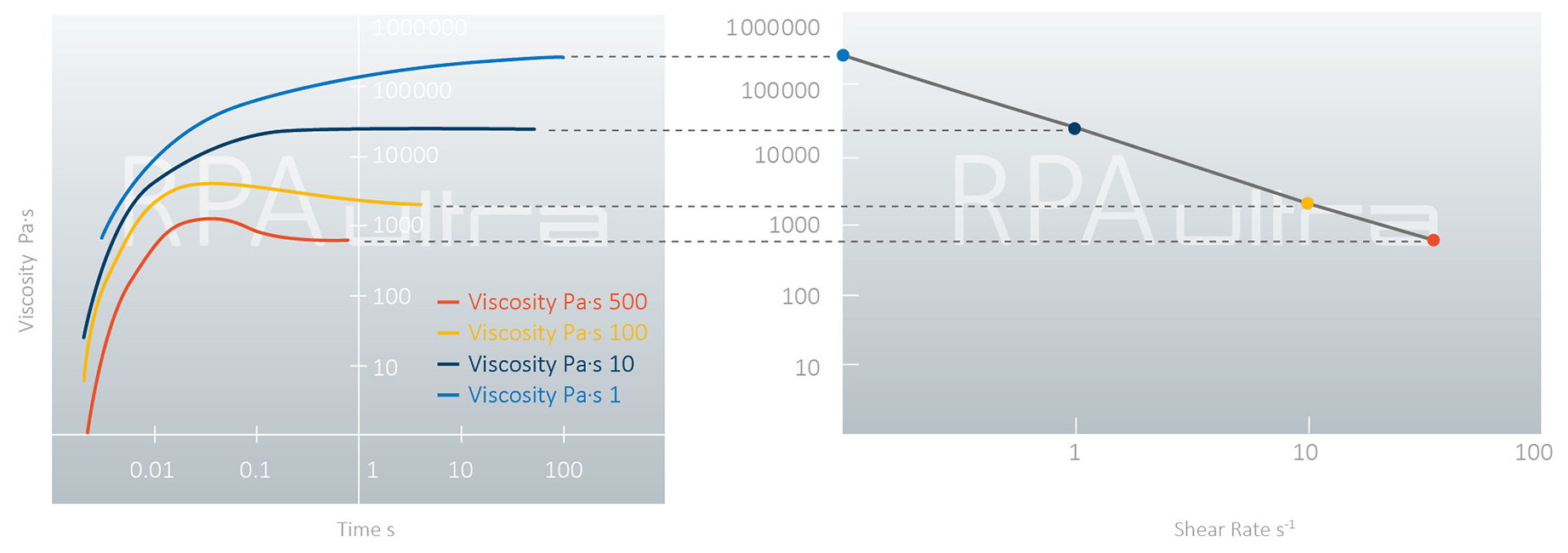
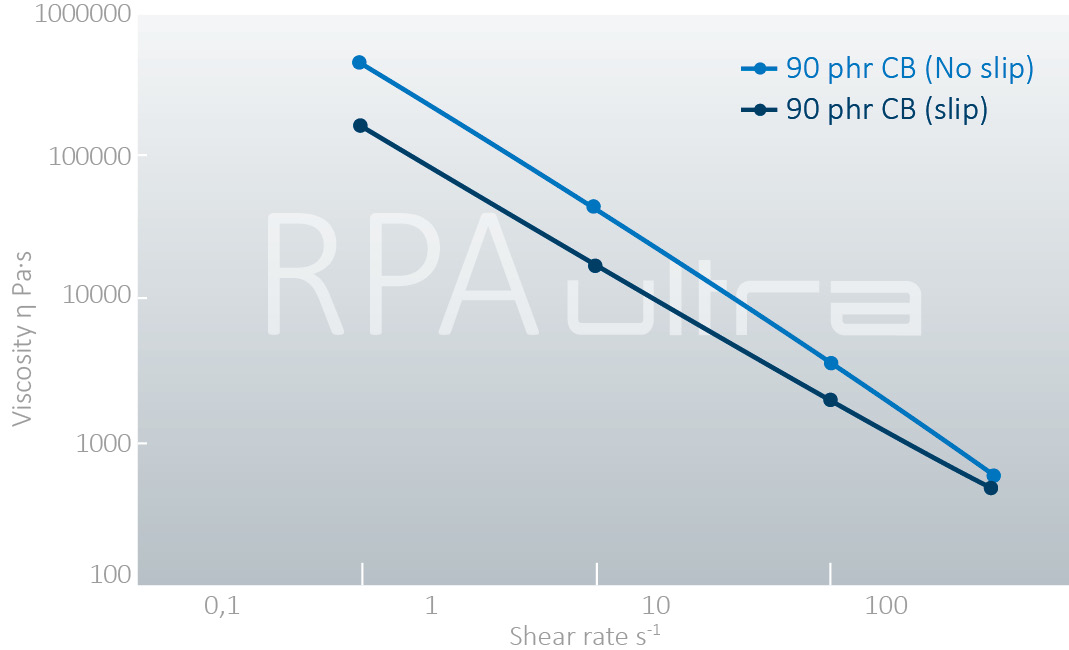
To better understand the manufacturing process of an unvulcanized rubber compound, the steady shear viscosity is one of the most important properties, especially crucial for determining the process parameters for extrusion and injection molding purposes. The RPA ultra’s rotating lower die with unlimited strain thus provides the user with a dual test mode: dynamic and steady shear. A significant challenge in the processing of rubber compounds is the issue of Wall Slip. This is a rheological phenomenon where slippage occurs, for example, between the extruder wall and the flowing material. We offer an optional solution where the upper die is replaced by a defined polished die set. In combination with a programmable internal pressure, this allows Wall Slip experiments to be carried out. From an isothermal test, values such as incubation time, reaction order and conversion rate constant can be determined for each temperature. The calculation is according to the DIN 53529 standard. With the help of the incubation time and the conversion rate constant at at least 3 different temperatures, the activation energies of the incubation and the conversion can also be determined. These are essential parameters for the computation of the heating time for the test specimen and also finds its use in production line. Measuring a specimen over a wide strain range shows the strain-dependent behavior, e.g., the linear viscoelastic range (LVE) up to Large Amplitude Oscillatory Shear (LAOS). The Payne test, which is performed at small strain amplitudes to investigate the (filler/polymer) filler networks, reveals information about the filler content and the filler dispersion levels. In the frequency and amplitude sweeps described above, one parameter (frequency or strain) is held constant while the other parameter (frequency or strain) is varied over a specified range. With matrix testing, the user can change both parameters – frequency and strain – during a sweep, making the testing procedure more flexible and thus providing more information with one measurement . One of the most common and important tests performed on rubber compounds are the isothermal cure tests. All important test parameters such as maximum and minimum torque, TC values, reaction time and rate, etc. are determined and made available to the user in tabular and/or graphical form for further analysis in the BareissOne software In order to evaluate the behavior of a sample over a wide temperature range, non-isothermal measurements (temperature sweep) are typically performed at different heating rates. This measurement at different heating rates also paves the way for non-isothermal kinetic calculations – a module that is also integrated into the BareissOne software. LAOS is essentially an amplitude sweep performed at relatively large amplitudes to study and evaluate the nonlinear viscoelastic behavior of a sample. The nonlinear behavior of a material is based on its polymer architecture > linear or branched polymer. The LAOS results are also used for the FT rheology. The LCB index (Long Chain Branching) or the Q parameter is calculated using the harmonic spectrum from the Fourier analysis (FFT). By characterizing a sample over a wide range of frequencies, the user obtains a comprehensive overview of the viscoelastic behavior as well as the molecular structure (molecular weight and molecular weight distribution). Viscoelastic properties such as complex modulus, elastic modulus, loss modulus, complex viscosity, phase angle, etc. are calculated at each frequency as a result of the frequency- dependent behavior of the sample. This instrument thus expands the range of applications to better describe, among other things, current topics in rubber technology such as wall slip behavior, polymer branching and sustainable fillers (rCB). The number of data points recorded per cycle has increased significantly, which in turn improves the signal-to-noise ratio when performing Fourier Transform Rheology. The ranges in which the device operates at shear rates of 500 s-1 are typical of the extrusion range. Initial studies have already shown that such a measurement method can be used to make an estimate of the processability of a compound. This means that in the event of substitution or fluctuations in raw material quality, the user can recognize at a very early stage whether this compound can be processed well or whether further processing aids need to be added – this also offers crucial time saving and financial advantages in the new development of rubber compounds.
Product Information
Watch video explaining Rubber Rheometer
Measuring Methods
Steady Shear Viscosity
Wall Slip

Kinetics
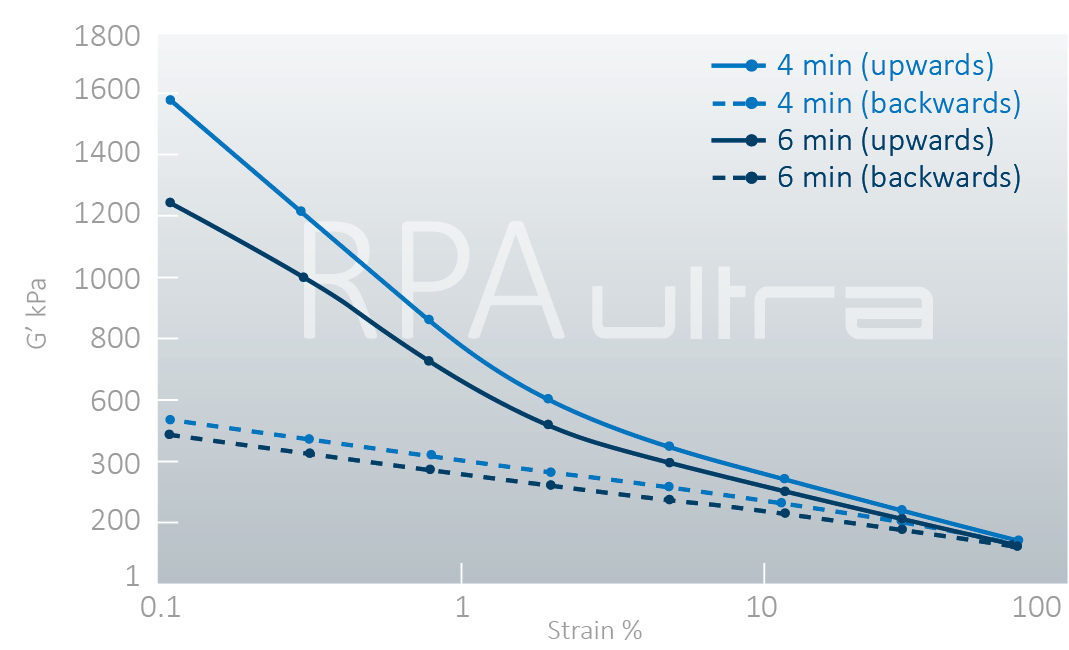
Strain Sweep
Matrix-Test
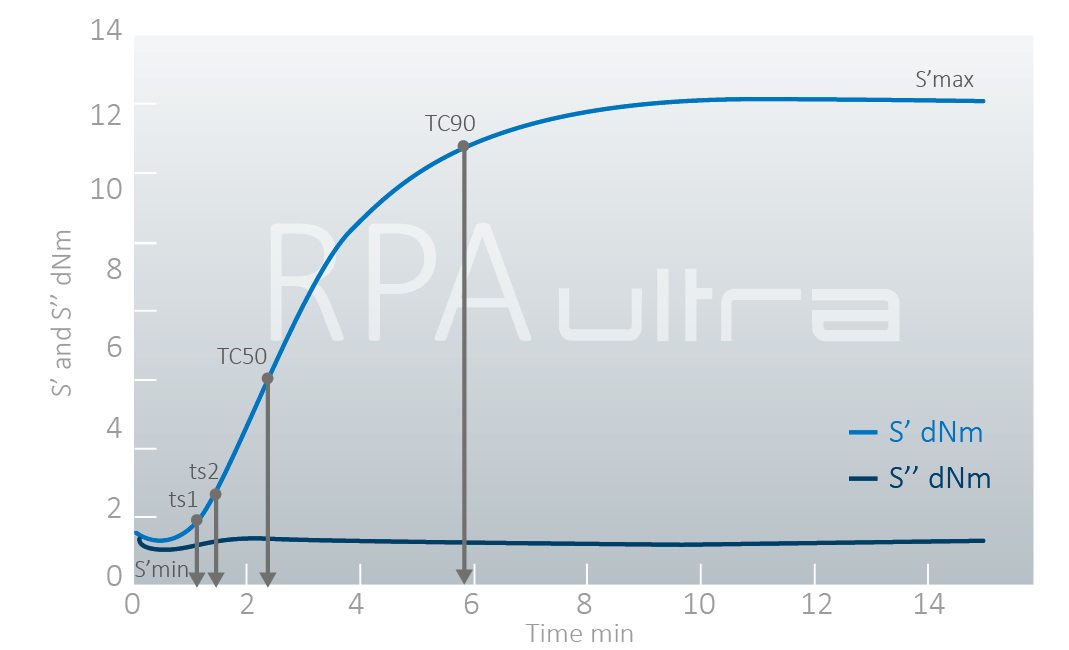
Isothermal Test

Non-Isothermal Test

Large Amplitude Oscillatory Shear (LAOS)
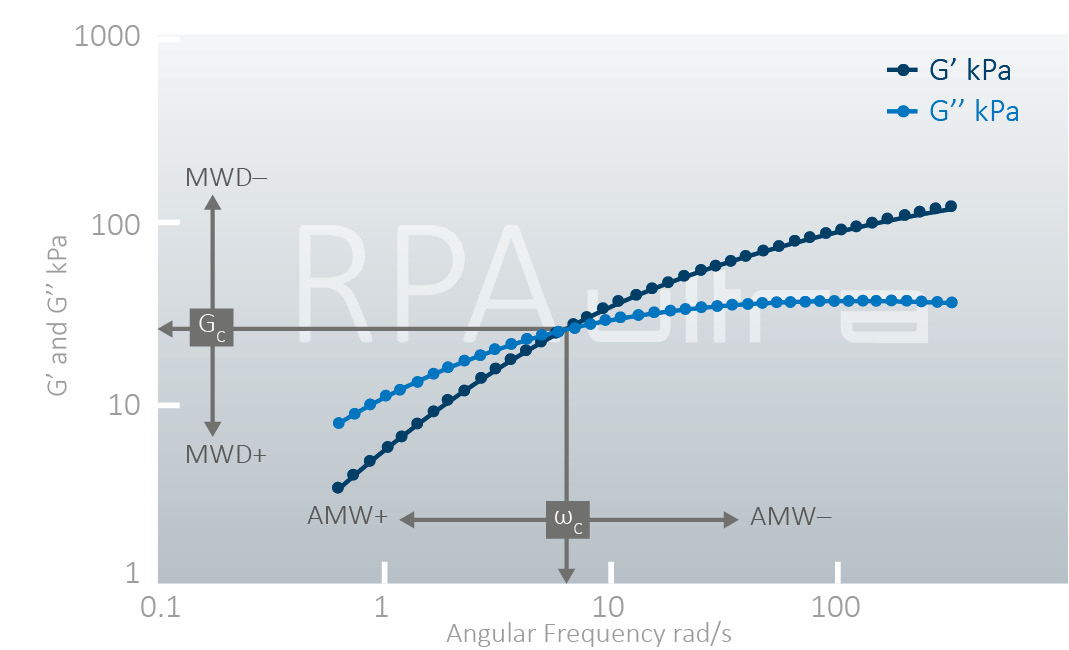
Frequency Sweep
RPA Ultra Application
Specifications
Parameter
Value
Max. shear rate in rotation
500 s⁻¹
Max. shear rate in oscillation
100 s⁻¹
Max. heating rate
1.33°C/s (80°C/min)
Max. cooling rate
0.5°C/s
Die config.
Sealed die, biconical and plate-plate
Drive system
High dynamic torque motor, High-resolution controller
Oscillation frequency
0.001 to 100 Hz
Oscillation strain
±0.001° to unlimited, ±0.014% to unlimited >rotational
Temperature range
Ambient to 235°C
Measured data
Torque, temperature, frequency, strain; Optional: Normal force, die pressure
Die gap
0.48 mm nominal
Sample volume
4.5 cm³
Electrical
400V/16A
Closing system
Soft closing to prevent foil rips and damage to test samples;
optionally variable closing force
Torque range
0.001 to 250 dNm
Normal force / Pressure (opt.)
Up to 10 kN
Test modes
Isothermal, Non-Isothermal, Strain Sweep, Frequency Sweep, Steady Shear,
Relaxation, LAOS, Matrix Test
Interface
Ethernet
Data points
Over 3500 data points available for each static subset including S' Min, S' Max, TS 1, TS 2, TC 10, TC 30,
TC 50, TC 90 integrated, automatic reporting features for dynamic tests
Pneumatics
min. 6 Bar (11.5 kN) / 60 psi