How to Use a Fruit Penetrometer to Measure Fruit Firmness
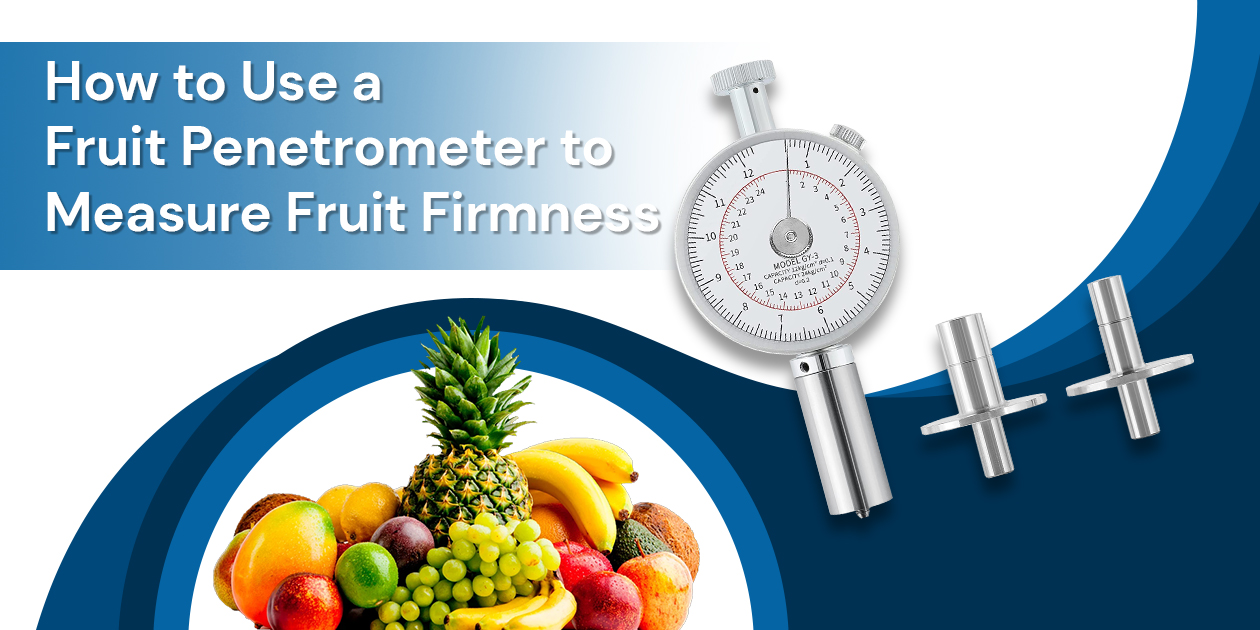
A fruit penetrometer measures the force needed to push a flat-ended plunger into the flesh of a fruit. The reading tells you how firm the fruit is. Growers use it to time the harvest. Packers use it to grade fruit. Retailers use it to check that fruit survived transport.
This guide shows you how to use a fruit penetrometer, step by step. It covers plunger sizes, harvest firmness targets, and the mistakes that skew results. It also explains why many teams now add a non-destructive fruit firmness tester to their workflow. We have made testing instruments in Germany since 1954, so we cover both methods fairly.
Why Measure Fruit Firmness?
Firmness is one of the best objective signs of maturity, storage potential, and eating quality. Colour and size alone can mislead.
University of Maryland Extension describes flesh firmness as an important maturity index when it is read alongside other quality measures. Late harvests give softer fruit that stores poorly and is more prone to disease. Early harvests give firmer but blander fruit (UMD Extension FS-1189).
Firmness data helps you:
- Pick at the right time. Harvest before fruit turns soft, but not so early that flavour suffers.
- Match fruit to the market. Wholesale fruit is picked firmer, because firm fruit bruises less and handles longer storage.
- Protect shelf life. Firmness checks in storage show which lots to sell first.
- Grade consistently. A number is easier to defend than a squeeze.
Harvest firmness reference points:
These figures come from University of Maryland Extension. They are starting points. Targets vary by cultivar, region, and market, so check your local extension guidance.
| Fruit and goal | Reference firmness (lbf) | Approx. force (N) | Source |
| Apples stored longer than 3 months | At least 15 | 66.7 or more | UMD FS-1189 |
| Apples stored about 1 month or sold right away | About 13 to 17, by cultivar | 57.8 to 75.6 | UMD FS-1189 |
| Wholesale peaches (minimum for transport and storage) | Above 10 | Above 44.5 | UMD FS-1182 |
Force values are converted from lbf (1 lbf = 4.448 N). Read the peach guidance in full at UMD Extension FS-1182.
What Is a Penetrometer, and How Does It Work?
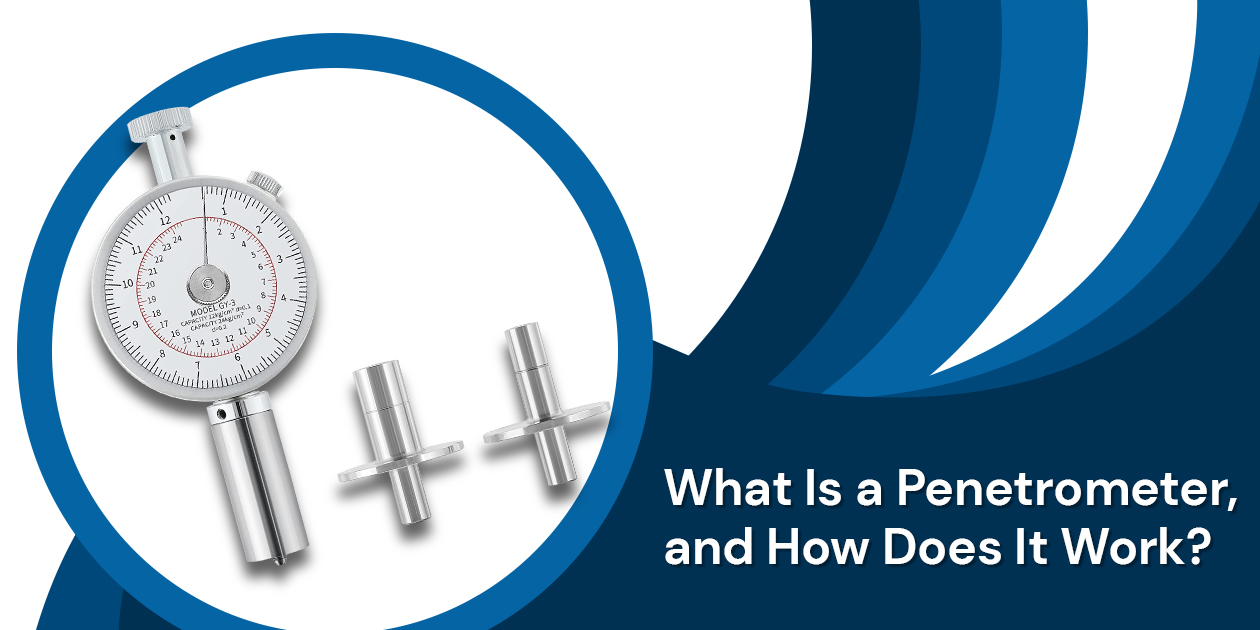
Short answer: A penetrometer is a hand-held or bench-mounted force gauge with a flat-ended plunger. It records the peak force needed to push the plunger to a set depth in peeled fruit flesh.
The method goes back to the Magness-Taylor pressure tester, which USDA researchers J. R. Magness and George F. Taylor described in Department Circular 350 in 1925. Researchers still treat it as the reference method for fruit firmness, and other firmness methods are usually checked against it. Michigan State University researchers describe it as forcing a cylindrical metal tip into peeled apple flesh and recording the maximum force (MSU thesis).
Key parts of a fruit penetrometer:
- Plunger (tip). A flat-ended cylinder. The two standard sizes are 7/16 inch (11.1 mm) and 5/16 inch (7.9 mm).
- Depth mark. A scribed line on the plunger shows how deep to push. University of Maryland Extension gives 7.9 mm for the Effegi-type testers it describes.
- Force scale. An analog dial or digital display. Most read in lbf, kgf, or N.
- Reset or peak-hold. The needle or display holds the maximum force until you reset it.
Which plunger for which fruit?
| Fruit | Standard plunger | Tip area | Source |
| Apples | 7/16 inch (11.1 mm) | About 0.97 cm² | UMD FS-1189, Penn State Extension |
| Peaches | 5/16 inch (7.9 mm) | About 0.49 cm² | UMD FS-1182 |
Tip areas are calculated from the diameters. Pears, kiwifruit, and other crops follow cultivar-specific protocols, so confirm the tip size with your buyer or extension service before you set a standard.
How to Use a Fruit Penetrometer: Step-by-Step Magness-Taylor Test
Short answer: Peel two small patches, push the correct plunger to the depth mark at a steady speed, read the peak force, and average both sides across a representative sample.
Step 1. Prepare your sample:
Pick fruit that is representative of the lot. Use fruit of similar size and from comparable positions on the tree. Let the fruit reach a consistent temperature first. Temperature changes firmness readings, so test all lots under the same conditions.
Test enough fruit to see the spread in a lot. Buyer specifications and extension guides set the sample size, so follow the one that applies to your crop.
Step 2. Remove the skin:
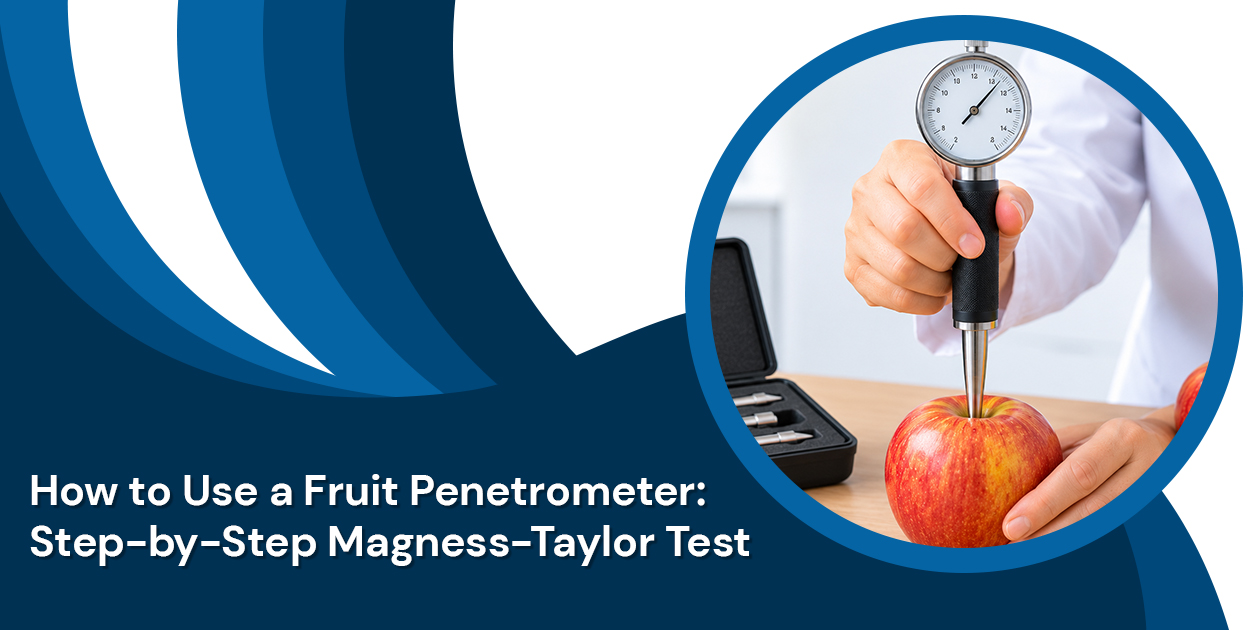
Use a sharp peeler or knife. Remove a disc of skin about the size of a quarter on each cheek. Choose a point midway between the stem end and the calyx end. For apples, test both the blush and non-blush sides and avoid sunburned areas (Penn State Extension).
Peeling matters. The skin adds its own resistance, so you would measure skin strength instead of flesh firmness.
Step 3. Choose the plunger and zero the gauge:
Fit the 11.1 mm tip for apples or the 7.9 mm tip for peaches. Reset the gauge to zero.
Step 4. Make the measurement:
Hold the fruit against a hard, stable surface. Keep the penetrometer square to the flesh. Push the plunger into the peeled area, with smooth and even pressure, until the depth mark reaches the flesh.
Speed matters. For peaches, University of Maryland Extension suggests about two seconds for the push and a reading to the nearest 0.5 lbf. Read the peak value, then reset.
Step 5. Test both sides and record the average:
Repeat on the opposite cheek. Average the two readings to get one value per fruit. Then average across the sample to describe the lot. Record the cultivar, orchard block, date, fruit temperature, and operator with each result.
What Affects Fruit Penetrometer Readings?
Cultivar, ripeness, temperature, and operator technique move the result more than most teams expect.
- Cultivar and fruit type. Melting-flesh and non-melting peaches soften at different rates, and apple texture varies by variety (UMD FS-1189).
- Orchard conditions. Crop load, irrigation, nutrition, and weather change firmness at harvest. Excess nitrogen and low calcium both speed softening, according to UMD FS-1189.
- Position on the fruit. Peach tips, sutures, and shoulders are weak points that soften earlier. Early-season cultivars tend to soften at the tip first, and late-season cultivars at the suture and shoulders (UMD FS-1182).
- Test fruit at a standard temperature.
- Operator technique. Push speed, angle, and depth change the peak force. Two people can get different numbers from the same fruit.
Common mistakes:
- Skipping the peel, or peeling too deep.
- Pushing past the depth mark, or stopping short of it.
- Changing speed between fruit.
- Mixing plunger sizes inside one data set.
- Testing cold fruit in the morning and warm fruit in the afternoon.
- Letting the gauge drift without a calibration check.
Limits of Manual Penetrometer Testing
The test is accurate when done well, but it destroys the sample, depends on the operator, and tests only a small share of the lot.
A penetrometer needs a peeled patch and a puncture, so the tested fruit can no longer be sold. A Michigan State University thesis notes that this destructive nature causes fruit loss and that firmness assessment therefore relies on sampling.
Manual work also adds variation. Peeling depth, push speed, and hand angle all differ between operators. Results written on paper then need re-typing before anyone can analyse them. As testing volume grows, these small differences add up and make trends harder to trust.
Fruit Penetrometer vs Non-Destructive Fruit Hardness Tester
A non-destructive tester reads firmness without puncturing the fruit. You can test many more pieces, keep them saleable, and store the data digitally. A penetrometer stays the reference method, so correlate the two before you switch.
| Factor | Manual fruit penetrometer | Bareiss HPE III Fff |
| Sample damage | Skin removed and flesh punctured | Anvil does not penetrate the peel |
| Operator influence | Push speed, angle, and peel depth | Spring-loaded sleeve and patented handgrip set pressure and angle |
| Data capture | Read and write by hand | Stores up to 300 values, with USB transfer to a PC |
| Output | Force (lbf, kgf, or N) | Fff value, a quotient, not a force unit |
| Interchangeable tips | Two standard plungers | Six interchangeable test anvils |
| Best used for | Reference checks and calibration studies | Routine screening of many pieces |
Our food firmness tester gives repeatable readings without damaging the produce. The HPE III Fff is a hand-held digital durometer. Its sleeve helps hold the correct contact pressure, and the screen shows the reading while the device stays on the fruit until the beep.
How we use the HPE III Fff on fruit:
- Switch the instrument on.
- Press the sleeve against the fruit so the pressure plate rests flat on the surface. Use enough pressure to seat the plate, but not enough to mark the fruit.
- Keep the instrument on the fruit while the display flashes.
- Hold it in place until the beep, then record the value.
Results are more reliable when the skin surface is even.
Which test anvil fits which fruit?
| Test anvil | Typical produce |
| Cylinder 0.10 cm² | Plums, damsons, apricots, peaches |
| Cylinder 0.25 cm² | Tomatoes, grapes, eggplant, cherries, melons, blueberries |
| Cylinder 0.5 cm² | Strawberries, watermelon, broccoli, meat, tofu |
| Sphere Ø 2.5 mm | Cucumber, radish, carrot, kohlrabi, zucchini, firm onion |
| Sphere Ø 5.0 mm | Avocados, apples, pears, oranges, peppers, papayas, mangoes, citrus, soft onion, melons, Cucumber |
| Spherical segment r = 6.3 mm | Cooked potatoes, bananas, smoked fish |
Build a correlation before you replace the penetrometer:
Fff readings are not pounds-force, so lbf targets from extension guides do not transfer directly. A sound changeover looks like this:
- Test a set of fruit with the non-destructive tester first.
- Test the same fruit with your penetrometer.
- Compare the two data sets for each cultivar.
- Set your own Fff acceptance ranges from that comparison.
Keep a penetrometer on hand for periodic reference checks.
Why Calibration and Traceability Matter
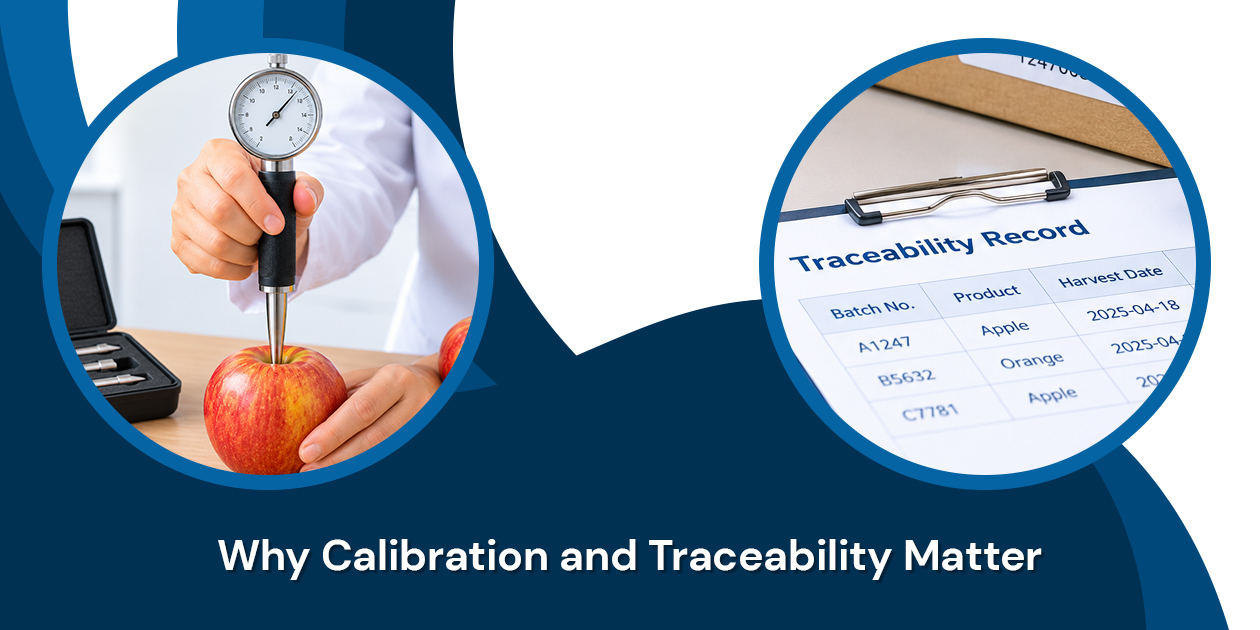
A firmness number is only useful if you can trust the instrument. We run our own DAkkS ISO/IEC 17025 calibration service, and a works calibration certificate for the HPE III Fff is available on request. Our quality systems are listed under ISO certifications.
For food teams, traceability also means keeping a record of each reading. The HPE III Fff stores readings on the device, and BareissOne software for logging and analysis is available on request.
Choosing the Right Method for Your Operation
- A small orchard checking harvest timing. A hand-held penetrometer follows extension guidance directly, and the cost is low.
- A packhouse grading daily volume. A non-destructive tester lets you test far more fruit and keep it saleable.
- A research lab or QC team. Use both: the penetrometer as the reference, and the non-destructive tester for high-volume screening once correlated.
- A retailer or distributor. A non-destructive tester checks incoming lots without writing off sample fruit.
Our team helps food producers pick anvils and set up a test plan. If you want to see the HPE III Fff on your own fruit, you can reach us through our contact page, by email at info@bareiss-testing.com, or by phone at +1-888-570-5577.
Frequently Asked Questions
A fruit penetrometer measures how much force it takes to push a plunger into the flesh of a fruit. Growers and packers use the reading to decide when to harvest, how long fruit can be stored, and which market it suits.
Peel a quarter-sized disc of skin from each cheek of the fruit. Hold the fruit against a hard surface. Push the correct plunger into the flesh at a steady speed to the depth mark. Read the peak force, then repeat on the other side and average the two readings.
University of Maryland Extension recommends a 7/16-inch (11.1 mm) plunger for apples and a 5/16-inch (7.9 mm) plunger for peaches.
University of Maryland Extension states that apples stored longer than three months should be harvested at 15 lbf or more. Apples stored for about one month or sold right away should read around 13 to 17 lbf, depending on the cultivar.
Yes. The test needs a peeled patch and a puncture, so the tested fruit is not sold. Teams that want to test more fruit without losing any often add a non-destructive tester.
It can replace routine screening once you correlate its readings with penetrometer results for each cultivar. The Bareiss HPE III Fff reports an Fff value, not a force, so lbf targets do not transfer directly. Many labs keep a penetrometer as the reference method.
Most read in pounds-force (lbf), kilograms-force (kgf), or newtons (N). One lbf equals 4.448 N and about 0.454 kgf. Always record the plunger size with the reading, because the same force on a different tip is a different pressure.
Follow the manufacturer’s interval and your own quality system. We recommend checking it against a reference before each harvest season and after any impact or drop.